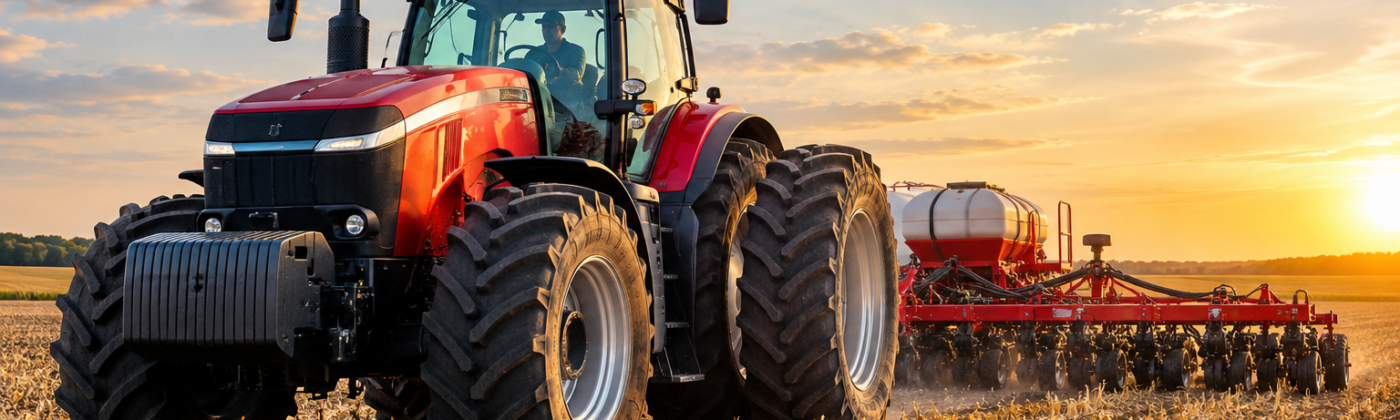
Better traction. Smarter tire choices. Healthier soil. More productive days in the field.
Agricultural tires do far more than carry a tractor across the field. They help transfer engine power to the ground, influence fuel efficiency, affect soil compaction, and determine how confidently equipment works in changing field conditions.
From spring planting through fall harvest, the right tire can make a meaningful difference to a farm’s productivity. But with so many manufacturers, tread designs, and tire technologies available, which options deserve a closer look?
We’ve assembled five agricultural tire options for farmers to research, compare, and discuss with their local tire dealers.
Important ranking note: This is an editorial shortlist, not a universal ranking of every farm tire. BKT has particularly useful independent test evidence for the model featured below. The remaining selections are comparison candidates, not products proven inferior in equivalent head-to-head testing.
1. BKT Agrimax V-Flecto: Best-Supported Choice for Soil Protection
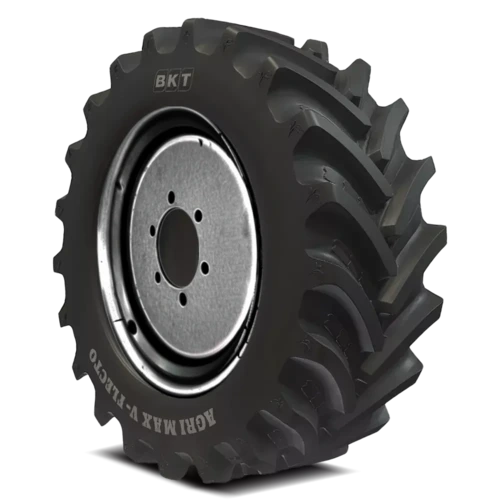
Why it deserves attention: Independent testing, traction performance, and soil preservation.
The BKT Agrimax V-Flecto is designed for modern agricultural tractors that need to combine traction with efficient operation and soil protection. Its Very High Flexion (VF) construction is intended to carry loads at lower inflation pressures than conventional tires when used within the manufacturer’s specifications.
An independent DLG test evaluated specific BKT tire sizes against reference tires under defined field and transport conditions. The report found a larger tire footprint, lower measured ground pressure, and favorable results for traction, track depth, and fuel consumption in the tested setup.
Those findings make this model a particularly compelling starting point for farmers concerned about soil health and field efficiency. Remember that actual performance depends on the tractor, tire size, axle load, pressure, and working conditions.
Explore the evidence and product range:
- Read the independent DLG test report
- Visit BKT Tires
- Shop agricultural tires through FarmTire
- Compare Agrimax V-Flecto sizes and buy online
2. Michelin AxioBib: A Premium Option for Traction and Soil Protection
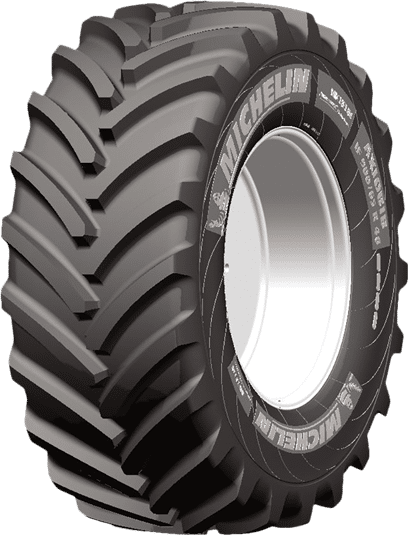
Michelin’s AxioBib range is designed for demanding agricultural applications where traction, load capacity, and soil protection are important considerations.
Michelin promotes its Ultraflex technology for applications requiring greater tire flexibility and performance at appropriate inflation pressures. The AxioBib product information also highlights traction and operator comfort.
For larger tractors and heavy field operations, it is worth comparing the correct AxioBib model against competing VF or IF tires. Ask dealers to compare load capacity, approved operating pressures, warranty coverage, and total installed cost rather than choosing on brand name alone.
Explore Michelin:
3. Goodyear Optitrac: A Brand to Investigate for Versatile Farm Work
Goodyear agricultural tires, manufactured and distributed by Titan International, are another option to investigate when comparing replacement tires for tractors and other farm machinery.
Before selecting an Optitrac model, confirm its current availability in your required size and whether its specifications suit your equipment. Tread design, load rating, speed rating, and the balance between field work and road transport all matter.
A tire that performs well in one application may not be the best choice for a different tractor, soil type, or workload.
Research and shopping:
4. Firestone Agricultural Tires: A Strong Candidate for Field-Traction Comparisons

Firestone has a long history in agricultural tires, with products designed for traction and durability across a variety of farm applications.
One useful resource is Firestone’s published Iowa traction comparison involving its Radial All Traction 23° tire and Michelin Agribib R-1W tires. Firestone reports favorable results for its product in that demonstration.
Because this is a manufacturer-published comparison, it should be treated as useful supporting information rather than independent proof that Firestone is the best tire for every farm.
When comparing options, ask your dealer about tread depth, sidewall construction, warranty, and the tire’s performance under the loads and pressures your operation requires.
Explore Firestone:
- Read Firestone’s Iowa traction comparison
- Visit Firestone agricultural tires
- Browse Radial All Traction 23 sizes and buy online
5. Trelleborg Agricultural Tires: Worth Comparing for Specialized Applications

Trelleborg offers agricultural tire solutions for tractors, harvesters, forestry machinery, and other equipment. Its range includes options aimed at different power levels, loads, and working environments.
For farms operating high-horsepower tractors or specialized machinery, comparing Trelleborg’s available models can help identify a suitable match for field conditions and transport requirements.
Use the manufacturer’s tire selector and technical resources to check fitment, pressure recommendations, and the specifications for your equipment.
Explore Trelleborg:
What Should You Look for When Buying Farm Tires?
Match the tread to the job
R-1 tires are commonly used for general agricultural work. R-1W tires generally feature deeper tread for applications that need additional traction in challenging conditions. R-3 tires are associated with turf applications, while R-4 tires are commonly used for industrial and mixed-surface work.
Always confirm that the tread type is suitable for your machine and intended use.
Pay attention to tire pressure
Inflation pressure affects traction, tire wear, load capacity, and soil compaction. Too much pressure for the actual load can reduce the footprint, while too little pressure can damage the tire or create unsafe operating conditions.
Use the manufacturer’s load and inflation tables for your exact tire, speed, and axle load. Never assume a low pressure is safe simply because the tire uses VF or IF technology.
Compare radial and bias construction
Radial tires can offer advantages in ride quality, traction, and footprint characteristics for many agricultural applications. Bias tires may be worth considering for particular equipment, operating environments, and budgets.
The best choice depends on how the machine is used, not simply on the construction type.
Calculate the real cost
Look beyond the sticker price. Compare installation, expected service life, warranty, availability, downtime risk, and suitability for your workload.
A lower-priced tire may be a good value, but only if it meets the demands of your operation.
Final Verdict: Choose for Your Farm, Not Just the Brand
The BKT Agrimax V-Flecto leads this editorial shortlist because it has particularly useful independent test evidence relating to soil protection and field performance. Michelin AxioBib, Goodyear Optitrac, Firestone, and Trelleborg are worthwhile alternatives to investigate, but their suitability depends on the specific product and application.
Before buying, compare exact tire sizes, approved pressures, load ratings, and prices from reputable dealers. A carefully matched tire can help your equipment work efficiently while supporting responsible soil management.
Better tire choices start with better information. Research the options, consult your dealer, and choose the tire that fits your equipment, soil, and season.
Editorial disclosure: Product descriptions draw on manufacturer information and published testing. This article is not a comprehensive independent test of all listed brands, and the order should not be interpreted as proof that one brand outperforms all others in every application. Product availability and specifications may change.
Published by Today Publications | Farmers Digital Solutions
Discover more agricultural equipment information and digital marketing opportunities at Today Publications.
#FarmTires #Agriculture #FarmEquipment #TractorTires #PrecisionAgriculture #SoilHealth #FarmTechnology #FarmingToday #Agribusiness #TodayPublications